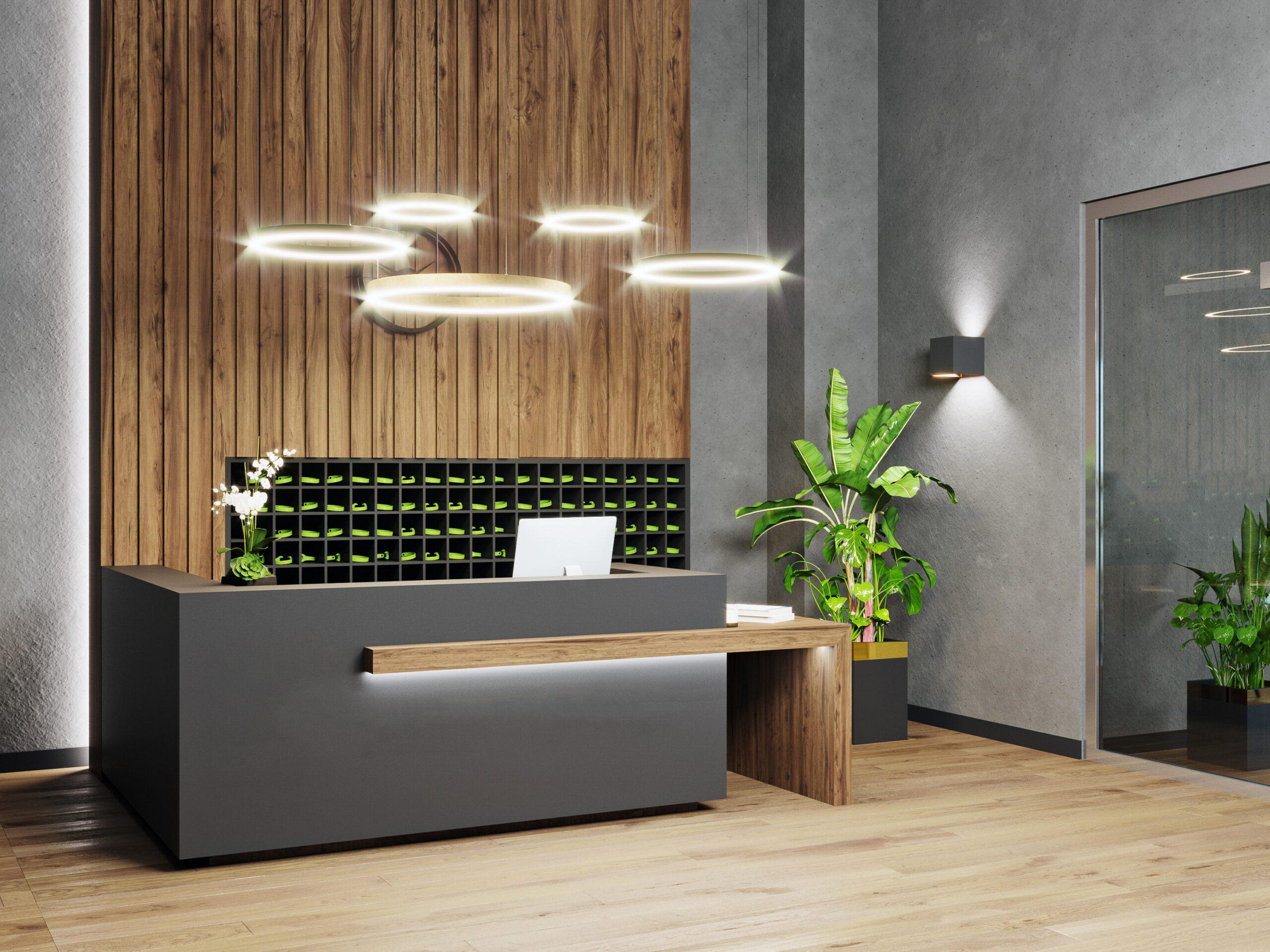
Office interiors tend to show wear first in the places people use most. Reception counters, corridor walls, meeting room joinery and shared areas tend to show signs of daily contact long before quieter parts of the workplace do.
Protective films can add a practical layer over suitable existing surfaces, helping businesses look after finishes without immediately replacing panels, cabinetry or other fitted elements. For Melbourne workplaces exploring protective films for office walls and interiors, the most useful starting point is identifying where everyday wear actually occurs.
Start With the Areas People Touch Most
High-contact areas are usually the first places to show signs of wear, including scuffs and other marks.
Think about a normal working day. Staff move through corridors, visitors arrive at reception, chairs sit close to walls, doors are opened repeatedly, and shared spaces are used by different people throughout the day.
Some of the areas worth checking include:
- Reception counters and front panels
- Wall panels beside walkways
- Built-in office cabinetry
- Meeting room surfaces
- Storage cupboards
- Breakout areas
- Shared furniture exteriors
Rather than updating an entire office, identifying these specific zones can help businesses focus on the surfaces that need the most attention.
Reception Areas Carry More Wear Than You Might Notice
A reception area often combines presentation with constant use.
The front counter
The reception desk is one of the first interior features visitors see, but it is also used throughout the working day. Front panels, edges and surrounding joinery can gradually lose the clean finish they had when the fit out was new.
Architectural surface film can be applied to suitable existing panels to refresh the appearance while adding a more durable finish for continued use.
The walls around it
Walls near waiting areas, entrances and circulation paths can also receive more contact than walls in private offices.
Using a protective architectural finish in these areas can help create a more consistent look without rebuilding the surrounding interior.
Corridors Tell You Where the Office Is Working Hardest
Busy corridors often reveal how people naturally move through a workplace.
Walls beside doorways, corners and narrow passages may be exposed to bags, furniture movement, cleaning equipment and repeated contact. Over time, these sections can start to look different from quieter areas.
Protective wall films can make sense in these locations because they focus protection where it is actually needed.
They can also introduce timber, stone, matte or solid-colour finishes when the business wants to update the corridor’s visual character at the same time.
Built In Joinery Does Not Always Need Replacing
Existing office joinery can often remain useful even when the visible finish looks dated or worn.
Cabinet doors, storage units, shelving exteriors and built-in furniture may still function perfectly well. Replacing the entire unit simply to change its appearance can therefore involve more work than the space really needs.
Interior wraps provide another option for suitable surfaces.
For example, an existing cabinet could be refinished from an older colour to a timber-inspired or matte finish while retaining the underlying structure.
This can be particularly relevant during an office refresh where the layout already works, and the main concern is the condition or appearance of visible surfaces.
Meeting Rooms Need a Different Kind of Attention
Meeting rooms may experience less foot traffic than reception areas, but presentation often matters more.
Boardroom cabinetry, feature panels and built-in furniture form part of the environment seen by clients, suppliers and employees. A tired finish can stand out even when the rest of the room remains in good condition.
When protection and appearance overlap
This is where decorative architectural films can serve two purposes.
They can help protect suitable underlying surfaces while also changing the visual finish. Options may include:
- Timber-inspired textures
- Stone effects
- Matte surfaces
- Solid tones
- Subtle textured finishes
The choice should suit both the existing substrate and the broader office interior rather than being selected purely from a sample.
Open Workspaces Benefit From Consistency
Large offices often contain different zones that have been updated at different times.
One area may have newer cabinetry, another may retain an older finish, and shared spaces may use completely different materials. The result can feel visually disconnected even when each part is still functional.
Architectural films can help bring selected surfaces into the same design language.
This does not mean every wall or cabinet needs to match. Repeating a timber tone, neutral finish or subtle texture across a few key areas can be enough to make the workplace feel more considered.
Not Every Office Surface Needs Film
Protective film should be used where it has a clear purpose.
A quiet wall with little contact may not need extra protection at all. On the other hand, a reception counter, a frequently handled cabinet or a wall beside a busy walkway may be a stronger candidate.
Before deciding, consider three questions.
Is the existing surface still sound?
Film is applied over an existing substrate, so the condition of that surface matters.
Does the area receive regular contact?
Frequently used areas generally have a clearer reason for additional protection.
Is the business also trying to update its appearance?
If the current surface looks dated, architectural wrap can potentially address appearance and protection as part of the same update.
These questions help keep the project focused on useful improvements rather than covering surfaces simply because film is available.
Office Updates Do Not Always Require Major Building Work
A workplace can sometimes be refreshed by working with existing interior elements rather than removing them.
This is particularly useful when the office layout still suits the business. Reception desks, wall panels, cupboards and fitted furniture may only need a new surface finish rather than structural replacement.
For an occupied Melbourne office, reducing the amount of removal and rebuilding can also simplify the scope of an interior update.
The right approach depends on the condition, material and location of each surface, which is why an assessment is useful before deciding what should be wrapped.
Protect the Parts of the Office That Work the Hardest
The most effective office surface protection starts with the areas that receive the most contact.
Walk through the workplace and look at reception counters, corridors, cabinetry, meeting rooms and shared spaces. These areas often provide a clearer picture of what needs attention than looking at the office as one large project.
Interior Wrap Solutions provides architectural films and surface wraps for suitable office walls, joinery, built-in fixtures and other commercial interiors across Melbourne. If your workplace has surfaces that are becoming worn or no longer suit the surrounding design, the team can help assess which areas may be suitable for wrapping.